Reading time:
Your analytics tell you what happened on your product page. They never tell you why.
This guide breaks down the single most direct way to learn why shoppers hesitate and why the moment you ask matters as much as the question.

Only 4% of stores ask their buyers why they almost didn't buy. The other 96% are guessing.
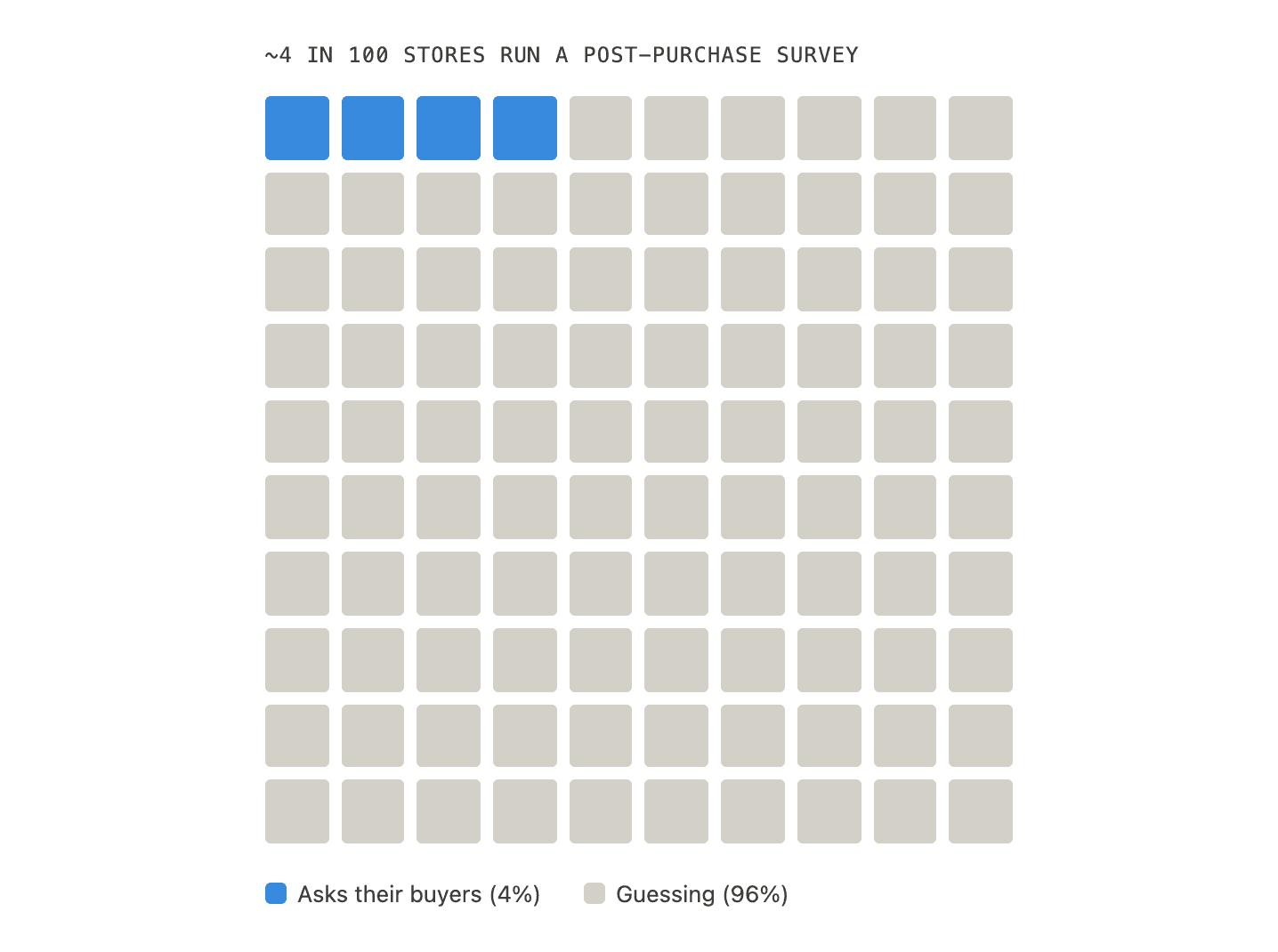
Every other tool tells you what. Only asking tells you why.
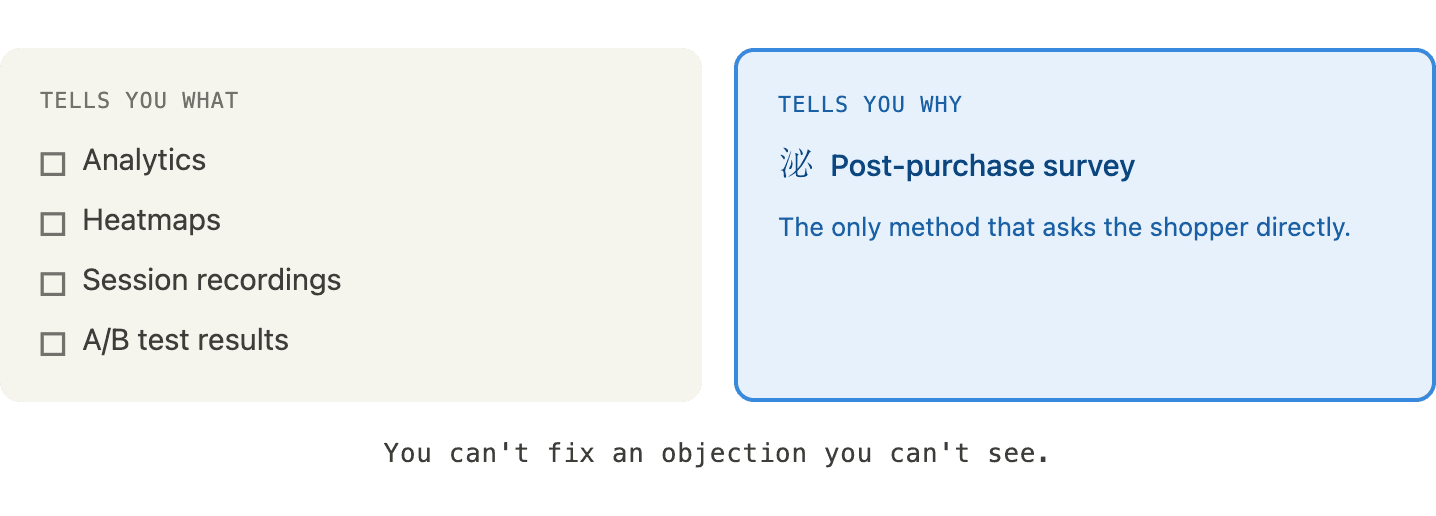
You already have analytics. You can see your conversion rate, your add-to-cart rate, where people drop off, maybe even heatmaps and session recordings. All of it answers the same kind of question: what did shoppers do?
None of it answers the question that actually moves revenue: why did the ones who didn't buy, not buy?
You can watch a thousand people abandon your product page and still never learn the one objection behind it. The reason lives in the shopper's head — and the only way out is to ask.
Ask at checkout, not next week.
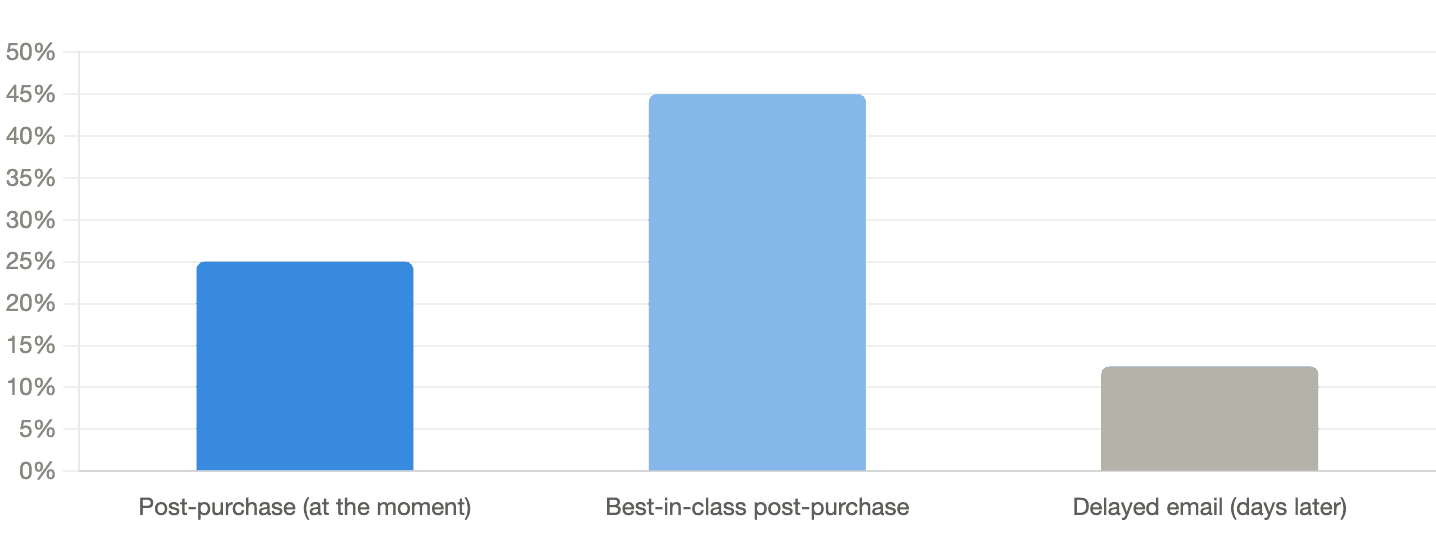
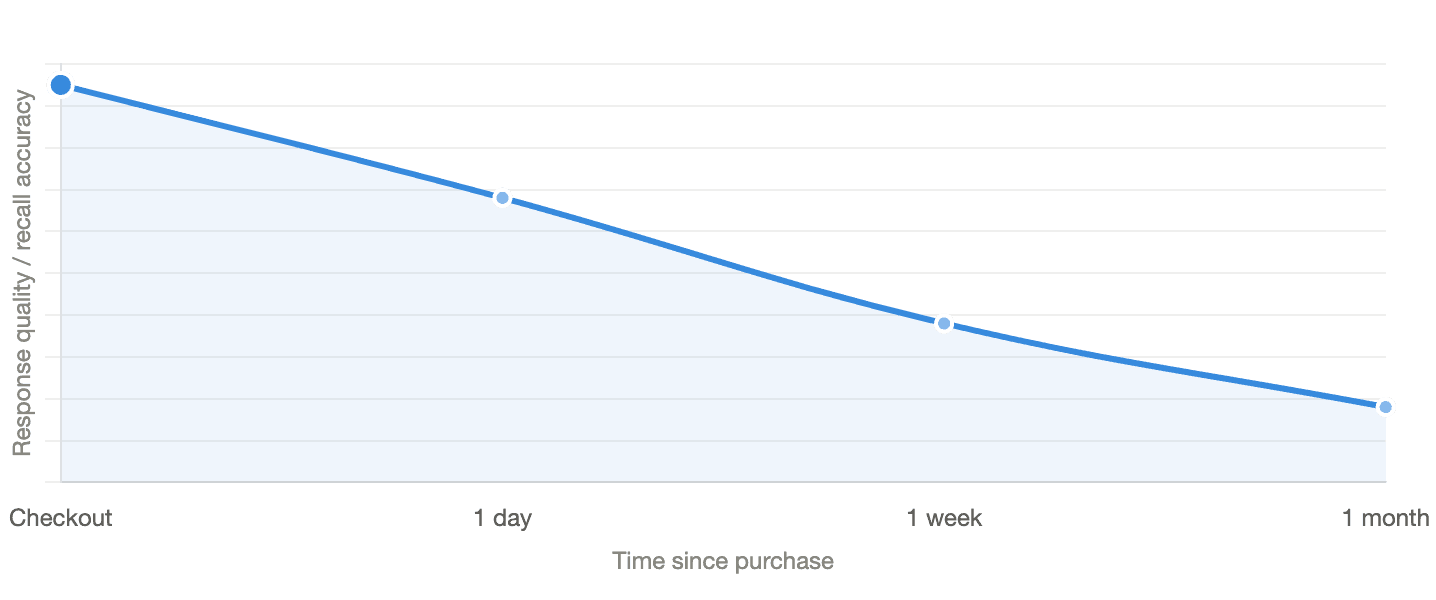
The post-purchase moment — right after someone buys — is the highest-context window you will ever get with a customer. The decision just happened. The reasoning is still fresh and unedited. The thing that almost made them leave, and the thing that finally convinced them, are both sitting right at the surface.
Wait a week and send a survey email instead, and you don't get the real reason — you get a reconstructed one. People rationalize. They forget the small friction that nearly cost you the sale. The signal decays fast.
That timing isn't a minor detail. It's the entire reason post-purchase surveys outperform every other survey format on the two things that matter: how many people respond, and how true their answers are.
Not all survey questions teach you the same thing.
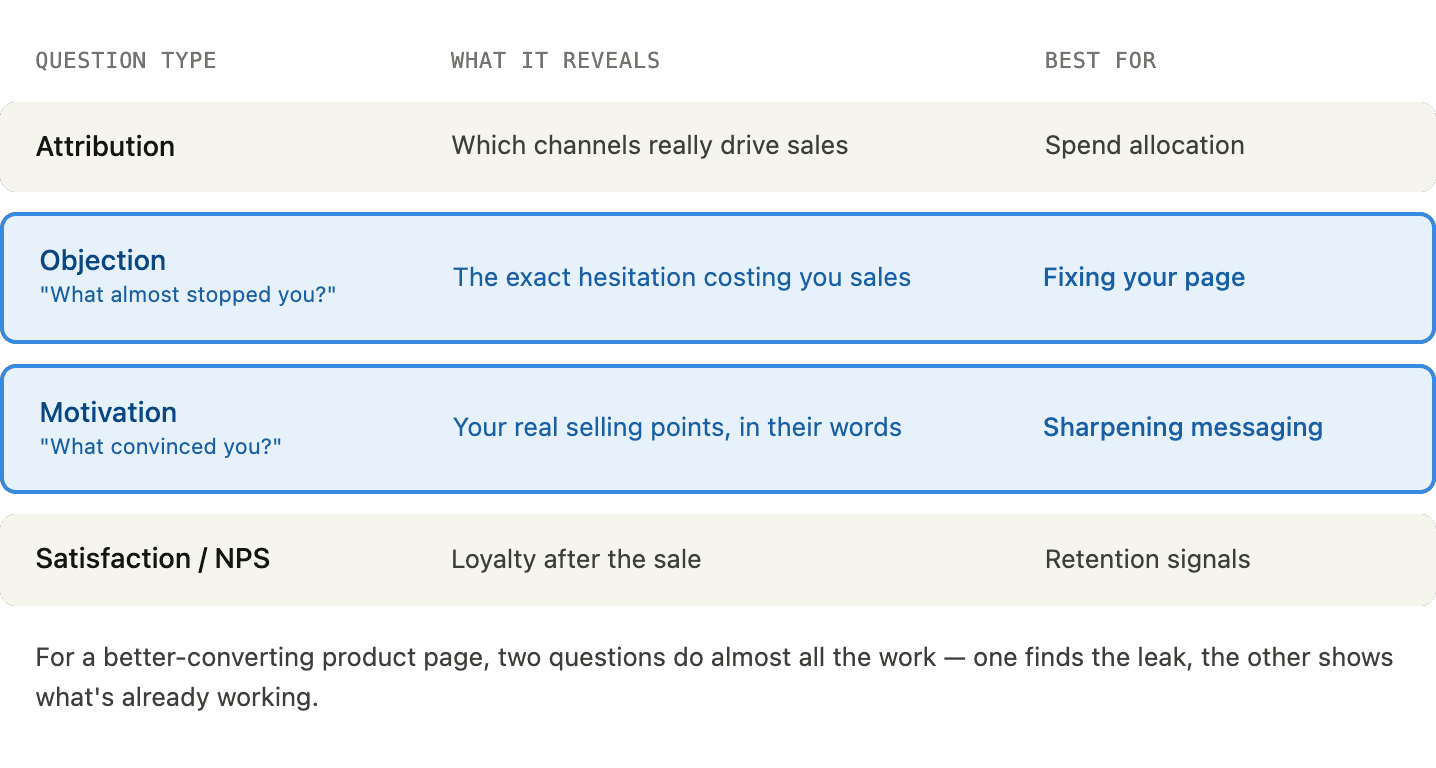
A post-purchase survey is only as useful as the question inside it. Here are the main types, and what each one actually reveals:
Attribution — "How did you hear about us?" Tells you which channels are really driving sales (often very different from what your ad platforms claim). Useful for spend allocation, not for fixing your page.
The objection question — "What almost stopped you from buying?" The single most valuable question for conversion. It surfaces the exact hesitation that nearly cost you the sale — the thing every non-buyer is also feeling, but silently. This is what points you at the fix.
The motivation question — "What finally convinced you to buy?" Reveals your real selling points in your customers' own words — the angles you should be leading with on the page and in your ads.
Satisfaction / NPS — "How likely are you to recommend us?" Measures loyalty after the sale. Good for retention signals; tells you nothing about why people don't convert in the first place.
The takeaway: If your goal is a better-converting product page, two questions do almost all the work: what almost stopped you, and what convinced you. One finds the leak. The other shows you what's already working so you can amplify it.
Asking is step one. The value is in what you do with the answer.
Knowing why shoppers hesitate is only useful if it changes something on your page. That's the gap most survey tools leave open — they hand you a pile of responses and stop there.
TryLab is built around closing that loop: it asks your buyers the two questions that matter, identifies the specific objection that's leaking sales, and turns it into a targeted product-page fix you can test — so you can actually measure the lift, not just collect feedback.
Find the objection. Fix the page. Prove the lift.

Making CRO simple
Turning real buyer feedback into tested product-page improvements